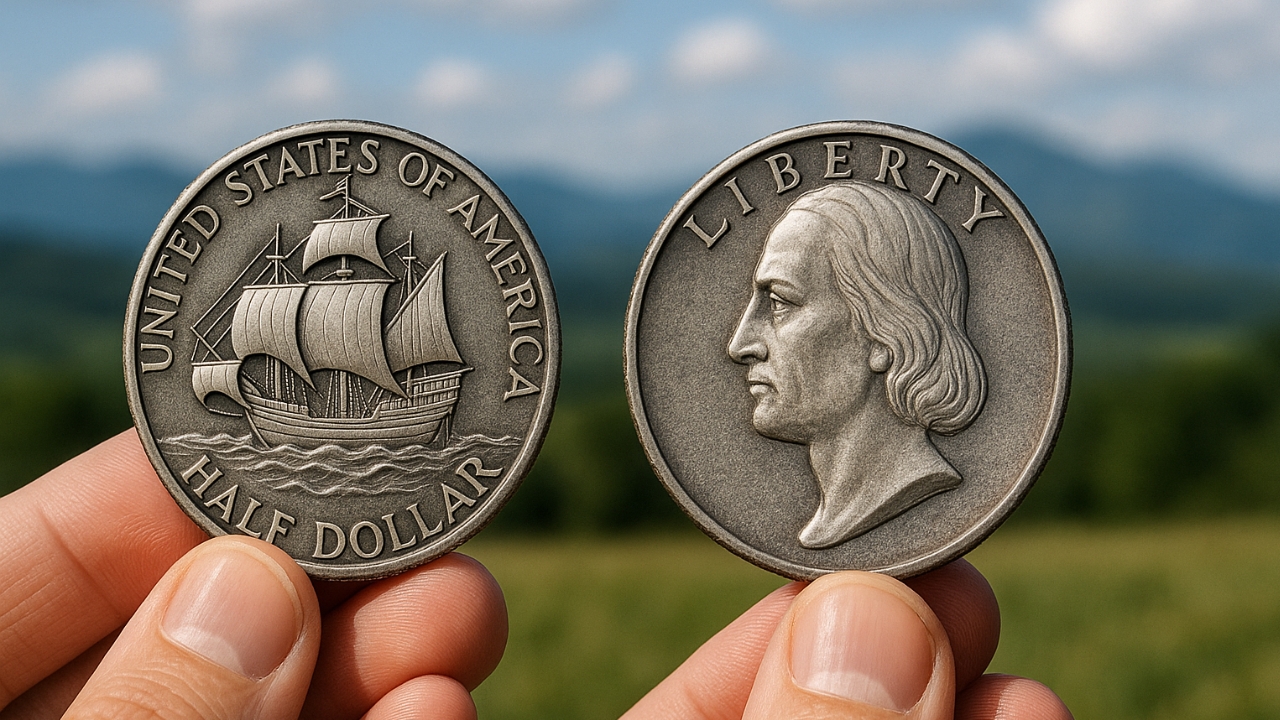
We’ve all seen them those odd, chunky half dollars languishing in a jar of spare change or a forgotten coin collection. Often dismissed as sentimental relics, most are worth little more than their 50-cent face value. But sometimes, hidden in plain sight, is a coin that can command a staggering price from collectors. Imagine leaving a $10,000 tip without even knowing it! That’s the thrilling reality behind certain Kennedy half dollars.
🎯The Diner Tip That Was a Treasure
The story sounds like something from a collector’s daydream: a customer at a humble diner leaves a Kennedy half dollar as part of their tip. To the server, it was just another coin. But weeks or months later, that same coin is identified as a rare variety—a mint error, a high-grade specimen, or a key date—transforming a 50-cent piece into an object worth thousands of dollars.
This tale underscores a crucial lesson for everyone: our everyday pocket change can sometimes be a canvas for extraordinary rarity and value. It pays to look a little closer.

🏷️What Makes a Kennedy Half Dollar Valuable
Not all Kennedy halves are created equal. While millions were minted for general circulation, a select few possess the holy trinity of collectibility: precious metal content, rarity, and condition.
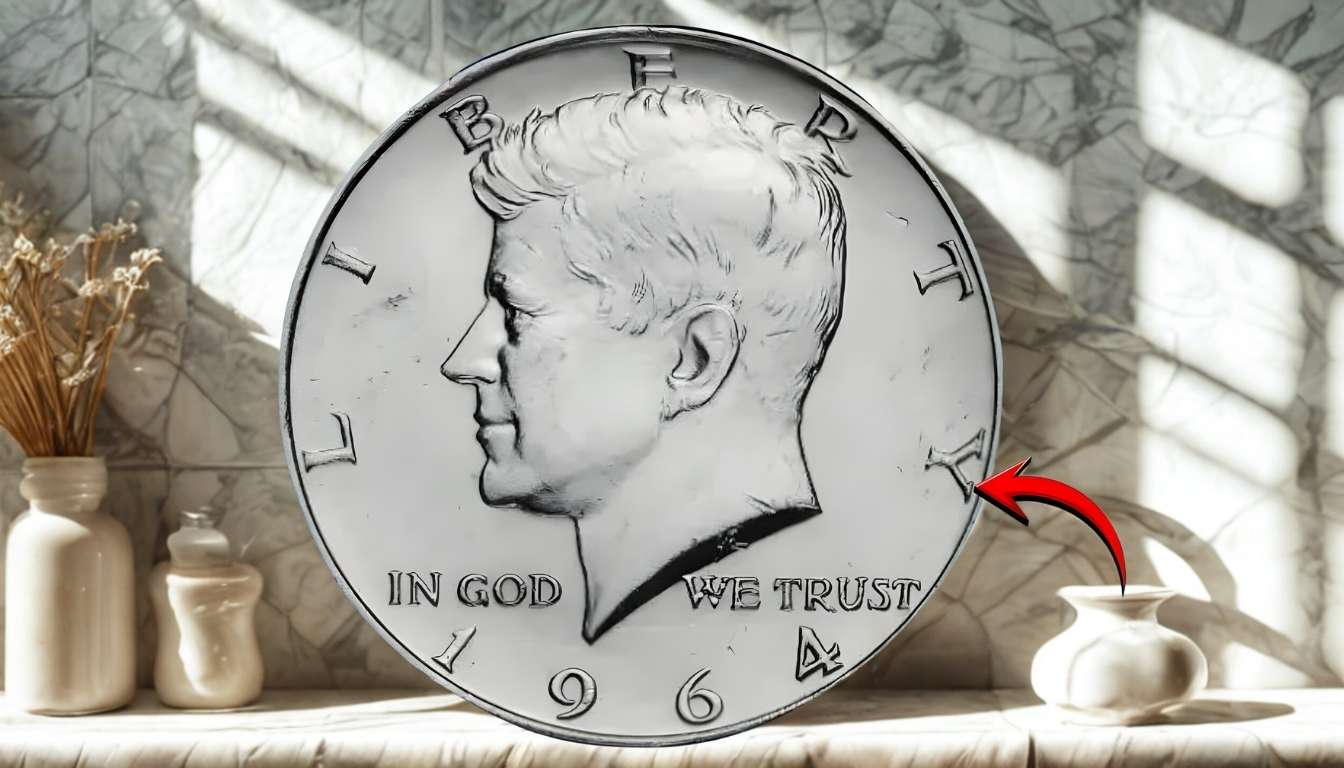
· The Silver Factor (1964-1970): The original 1964 Kennedy halves were struck in a heartfelt tribute to the fallen president and were composed of 90% silver. Even today, these coins are worth significantly more than face value simply for their precious metal content. From 1965-1970, the silver content was reduced to 40% for circulation strikes, making them less valuable but still sought-after.
· The Key is in the Details: After 1970, the circulating versions were made of a copper-nickel blend, making the silver issues the true prize for collectors.
· Mint Marks and Errors: A small letter on the coin indicating its origin—’D’ for Denver, ‘S’ for San Francisco—can make a world of difference. Coins with doubled dies (a misprint that creates a shadowing effect), off-center strikes, or other minting mistakes are especially coveted.
🎗️A Real-World Value Guide
Here’s a quick look at what you might be holding (Note: Values are for uncirculated/gem examples without major errors):
| Coin Specification | Potential Value Range | Key Reason for Value |
| 1964 Kennedy Half (90% Silver) | $10 – $50+ | Intrinsic silver value & first year of issue |
| 1964 Proof (Special Finish) | $25 – $100+ | Mirror-like finish for collectors |
| 1970-D Kennedy Half | $20 – $100+ | Extremely low mintage; only available in mint sets |
| 1998-S Silver Proof | $30 – $70+ | 90% silver composition in modern proof |
| Rare Error Coin (e.g., Doubled Die) | $1,000 – $20,000+ | Scarcity and uniqueness of the minting mistake |
🏆How to Spot a Potential Winner
You don’t need to be a professional numismatist to start your hunt. Here are a few simple things to check:
1. Check the Date: Focus on coins from 1964 to 1970 for their silver content.
2. Look for a Mint Mark: The 1970-D is a famous key date because it’s hard to find. Look for the small ‘D’ above the date on the front.
3. Examine the Details: Under a good light or magnifying glass, look for any doubling in the lettering or the portrait. Does anything look blurry or off-center?
4. Assess the Condition: A coin that looks like it just left the mint—bright, shiny, and without a single scratch—is always more desirable than a worn, circulated one.
🔍Why the Kennedy Half Endures
Beyond the potential for profit, the Kennedy half dollar holds a powerful place in American culture. Introduced in 1964 as the nation mourned, the coin is a tangible piece of history. It represents a specific, poignant moment in time, making it more than just currency—it’s a memorial. For collectors, owning a high-grade or rare example is like preserving a piece of that legacy.
📌Frequently Asked Questions
1. I found a 1964 Kennedy half. Is it automatically valuable
While all 1964 halves contain 90%silver and are worth more than 50 cents (roughly $8-$10 in silver content alone), a standard circulated one isn’t a life-changing find. Its value skyrockets if it’s in pristine, uncirculated condition or has a mint error.
2. Are any Kennedy halves after 1970 valuable
Most circulation strikes after 1970 are worth face value.The exceptions are special proof and silver proof versions sold directly to collectors in mint sets, which can be valuable. The 1987 half dollars are also somewhat collectible as they were only sold in mint sets and not released for general circulation.
3. What should I do if I think I have a rare coin
Handle it carefully by the edges to avoid leaving fingerprints and oils.Do not clean it, as this destroys its value. Your best bet is to take it to a reputable local coin dealer for a professional opinion.
4. What’s the most valuable Kennedy half dollar ever sold
The record holders are typically exceptional-grade 1964 Proof coins or dramatic error coins, which have sold at auction for well over $100,000.
5. Where is the mint mark located on a Kennedy half
For all coins from 1968 to the present,the mint mark is located on the obverse (front), just above the date on the right side. On the 1964-1967 coins, it’s on the reverse (back), to the left of the olive branch on the eagle’s leg.